
Before You Force It: The Secret to Reviving a Stuck Heirloom Sewing Machine
Corinne
6/18/20263 min read
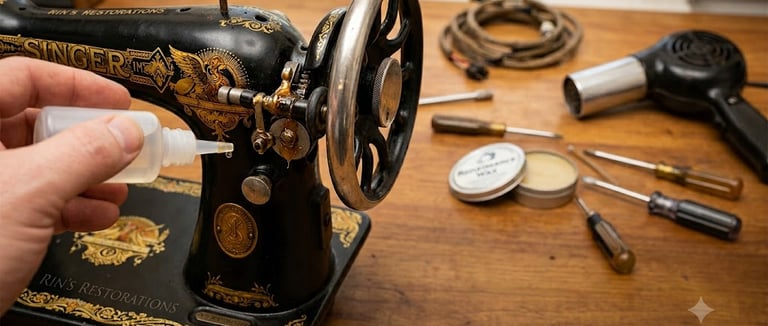
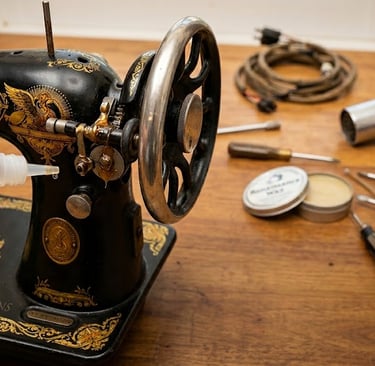
There is a distinct, unforgettable thrill that comes with finding a vintage sewing machine. Whether you just rescued a mid-century masterpiece from an estate sale, inherited your grandmother’s cherished all-metal workhorse, or pulled your own classic machine out of a closet after a few decades of quiet hibernation, the excitement is real. They truly don't make them like they used to.
You clear off the dust, open the case, admire the heavy-duty engineering, and reach for the handwheel to see how it feels.
But when you try to turn it, it won't budge. Or worse, it turns with an agonizing, heavy resistance that feels like trying to wade through wet cement.
In a moment of panic, it’s easy to assume the worst: Is the motor burnt out? Is a gear completely shattered inside? Is this beautiful piece of history total junk?
Take a deep breath and step away from the handwheel. More often than not, your machine isn't dead—it's just incredibly dry. Here is the secret to what’s actually happening inside a frozen heirloom machine, and how to safely wake it up without causing permanent damage.
The Science of "Hibernation": Why Old Machines Freeze
When a modern plastic machine breaks, it usually means a gear has snapped. But when a classic, all-metal vintage machine locks up, the culprit is almost always something much simpler: old oil.
Back in the day, sewing machine lubricants were primarily organic-based. When a machine sits unused in a closet, attic, or garage for ten, twenty, or fifty years, the volatile compounds in that old oil slowly evaporate.
What's left behind? A sticky, amber-colored residue that undergoes a chemical transformation over time. It stops acting like a lubricant and turns into a tough, stubborn varnish. Inside a high-quality vintage machine, the internal tolerances between moving parts—like the bushings, shafts, and gear linkages—are incredibly tight and precise. When that old oil turns to varnish inside those tiny gaps, it acts less like grease and more like superglue.
The machine isn't broken; it's literally glued shut by its own history.
The Dangerous DIY Trap: Step Away from the WD-40!
When faced with a stuck metal part, the modern homeowner’s first instinct is usually to reach for a blue-and-yellow can of WD-40. It seems like the perfect quick fix, right?
Please, don't do it.
While WD-40 is an excellent water-displacer for household chores, it is public enemy number one for vintage sewing machines.
It leaves a gummy residue: As WD-40 dries, it breaks down into a sticky film that actually attracts lint and dust, meaning your machine will gum up again even worse down the road.
It damages components: Overspray can easily degrade vintage electrical insulation, melt old wiring, attack certain early plastics, or permanently ruin delicate cosmetic paint finishes and historic decals.
How to Safely Gently Wake Up Your Machine
If you want to try easing your machine out of hibernation safely at home, you need to use two things: patience and the right materials.
Apply Gentle Heat: Since the old oil has hardened into a varnish, introducing mild heat can help soften it up. Take a handheld hairdryer, set it to low or medium heat, and direct the warm air toward the main internal joints and shafts (never leave it in one spot too long, and keep it away from electrical wiring).
Use Real Sewing Machine Oil: Once the metal is warm to the touch, apply a single drop of high-quality, clear, Lilly-white sewing machine oil directly to the designated oil ports and moving joints.
The Rocking Motion: Instead of trying to force the handwheel through a full rotation, gently rock it back and forth just a millimeter or two at a time. If the varnish is softening, you will slowly feel that millimeter turn into a centimeter, and eventually into a smooth, full rotation.
When to Call in a Specialist
If you’ve tried a little warmth and fresh oil and the handwheel still refuses to move, stop. Forcing a frozen machine can turn a simple cleaning job into an expensive mechanical disaster. Pushing too hard can strip gears, bend critical internal timing linkages, or completely burn out a vintage motor that is trying its best to turn a shaft that simply cannot move.
True mechanical restoration requires going beyond a surface oiling. To get a hibernating machine running like a dream again, it needs to be systematically degreased.
Professional restoration involves safely dissolving decades of hardened varnish from the inside out, utilizing precise methods like ultrasonic cleaning for small, heavily gummed-up components, and meticulously re-lubricating every single moving part with professional-grade lubricants.
Let’s Bring Your Piece of History Back to Life
Don't let a stubborn handwheel keep you from enjoying the unmatched stitch quality and durability of a classic machine. If your heirloom sewing machine is stuck in hibernation, let’s revive it safely.
At Rin's Restorations, we specialize in the mechanical and aesthetic preservation of vintage machines throughout Richmond, Katy, and the Greater Houston area. Click here to schedule a diagnostic appointment and let’s get your piece of history sewing beautifully again!
Contact
Phone
© 2026. All rights reserved.